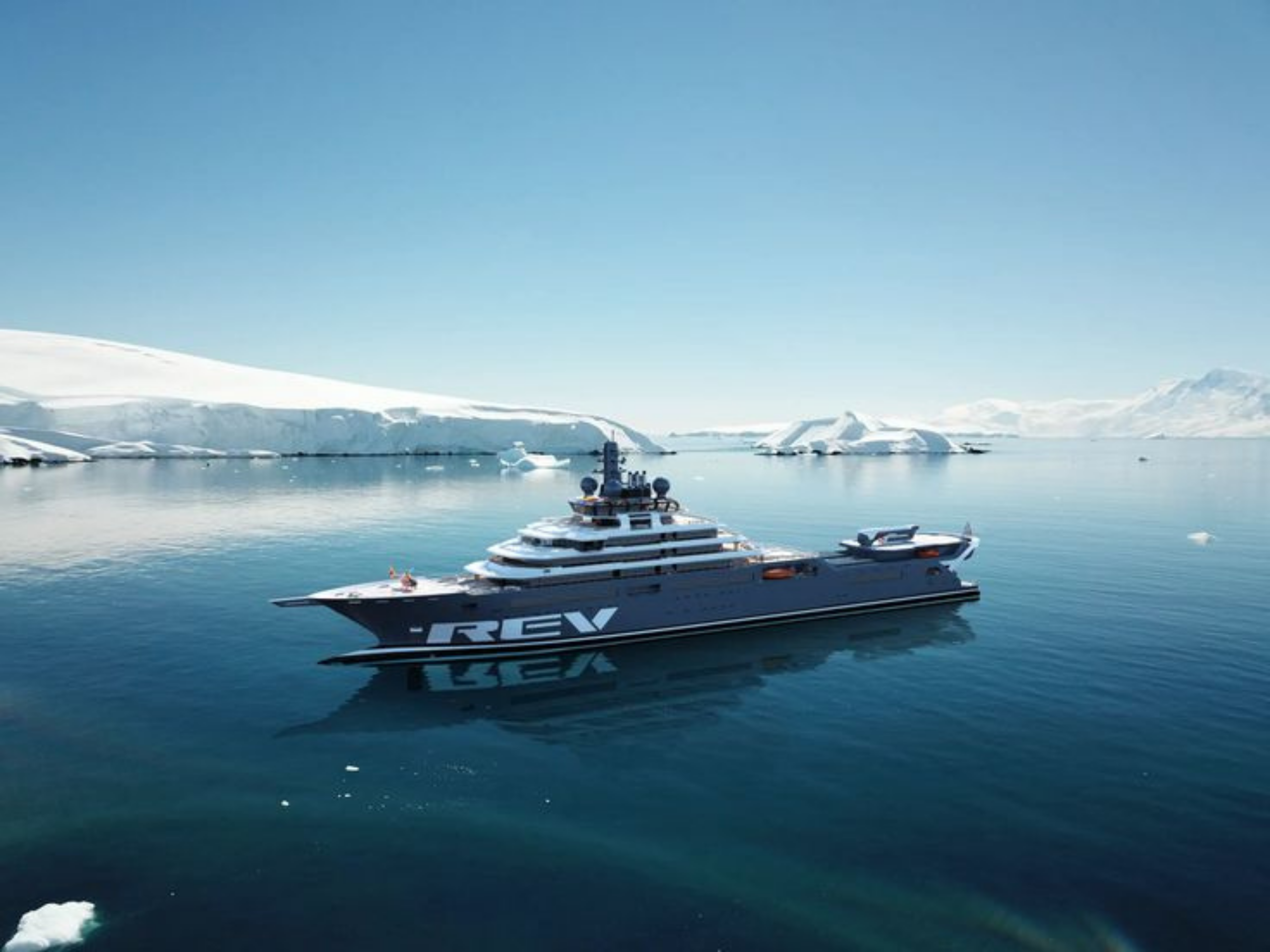
REV Ocean is not entering the conversation only as the world’s largest superyacht.
At nearly 195 meters, the vessel carries the scale, ambition, and visual presence usually associated with the most extreme forms of private ownership. But its purpose points in a different direction. REV Ocean was not created simply to move through the world as a symbol of status. It was designed to become a platform for ocean research, exploration, and environmental action.
That distinction is what makes the project relevant beyond the yachting world.
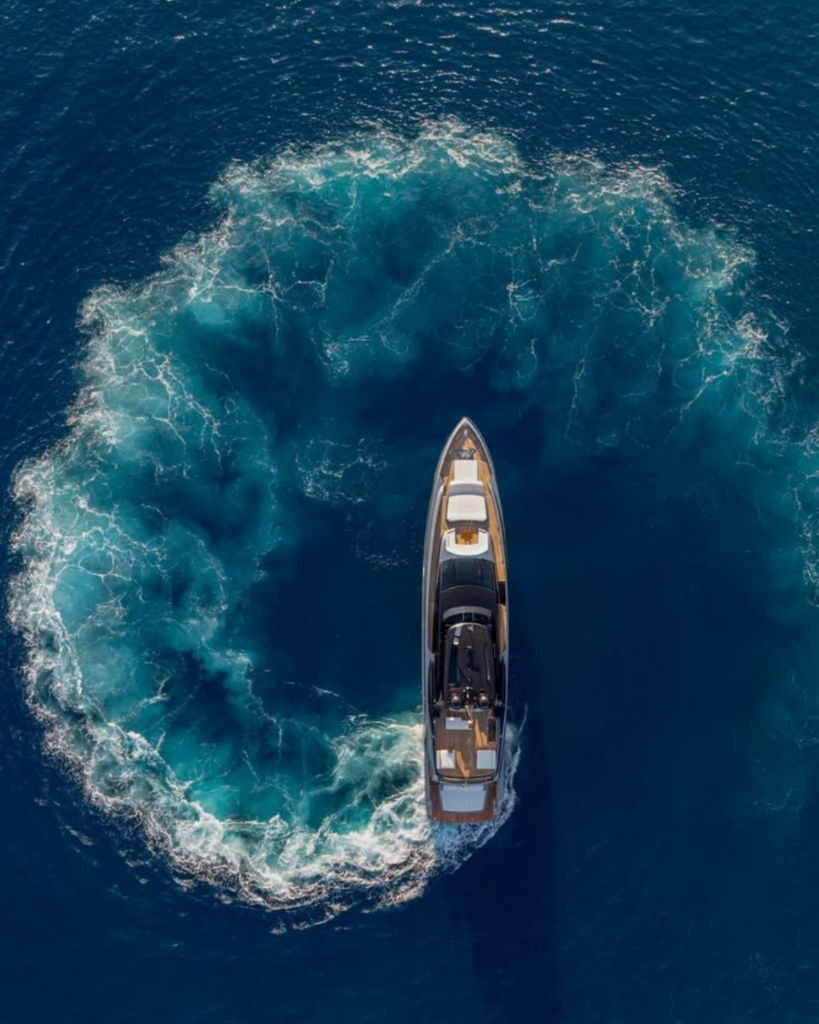
For decades, superyachts have been understood through a familiar language: size, privacy, design, destinations, and the identity of the people who own or charter them. They represent escape, access, and the ability to move outside the normal limits of travel. REV Ocean uses that same level of scale, but redirects it toward something more consequential.
The vessel was built to bring scientists, ocean experts, policymakers, innovators, and advanced research technology into the same operational environment. Onboard, the project combines the comforts and spatial ambition of a superyacht with the infrastructure of a serious research vessel, including laboratories, deep-sea systems, mapping technology, submersible support, and spaces for discussion, training, and media.
In that sense, REV Ocean is not only a vessel. It is an argument.
It suggests that access, one of the defining currencies of wealth, can be used for more than exclusivity. It can become a tool for knowledge. It can help researchers reach parts of the ocean that remain difficult to study. It can shorten the distance between data, decision-making, and action.
That is especially important because the ocean remains one of the least understood environments on the planet. It covers most of the Earth, but much of its depth, biodiversity, and ecological complexity remains underexplored. Conservation goals often depend on scientific information that is incomplete, fragmented, or difficult to gather. REV Ocean enters that gap with a clear proposition: better access can lead to better knowledge, and better knowledge can support better protection.
Its upcoming scientific program is expected to move through major ocean regions, including the South Atlantic, the Caribbean, the Sargasso Sea, and the Eastern Tropical Pacific. These are not destinations in the conventional sense. They are living systems, connected by biodiversity, currents, deep-sea landscapes, marine protected areas, and questions that matter far beyond the route itself.
For a vessel often described through its size, the more interesting story is what happens when that size becomes functional. A nearly 195-meter platform can carry people, equipment, laboratories, underwater vehicles, data systems, and convening spaces in a way that smaller research operations often cannot. It creates room not only for observation, but for collaboration.
This is where REV Ocean challenges the traditional image of the superyacht. Instead of being defined only by private leisure, it introduces a different model: a privately funded platform with public-facing scientific ambition. That does not erase the symbolism of scale or wealth. It reframes it.
The project also reflects a broader shift in how influence is being understood. The old language of success was often built around possession: the largest house, the rarest object, the most private destination. But the newer conversation is increasingly tied to what access enables. The question is not only what someone can own. It is what that ownership can make possible.
REV Ocean sits directly inside that tension. It is impressive because of its size, but more relevant because of its intended use. It belongs to the world of high-end design, advanced engineering, and elite mobility, but it also speaks to science, stewardship, and responsibility.
For Galleria, this is where the subject becomes larger than a yacht.
REV Ocean represents a shift from status as display to status as infrastructure. It shows how private capital, technology, exploration, and environmental responsibility can occupy the same space when ambition is directed with purpose.
Its legacy may not be defined by being the largest vessel of its kind.
It may be defined by what becomes possible once that scale is put to work.
Business & Lifestyle files are reported by the desk and carry no byline.