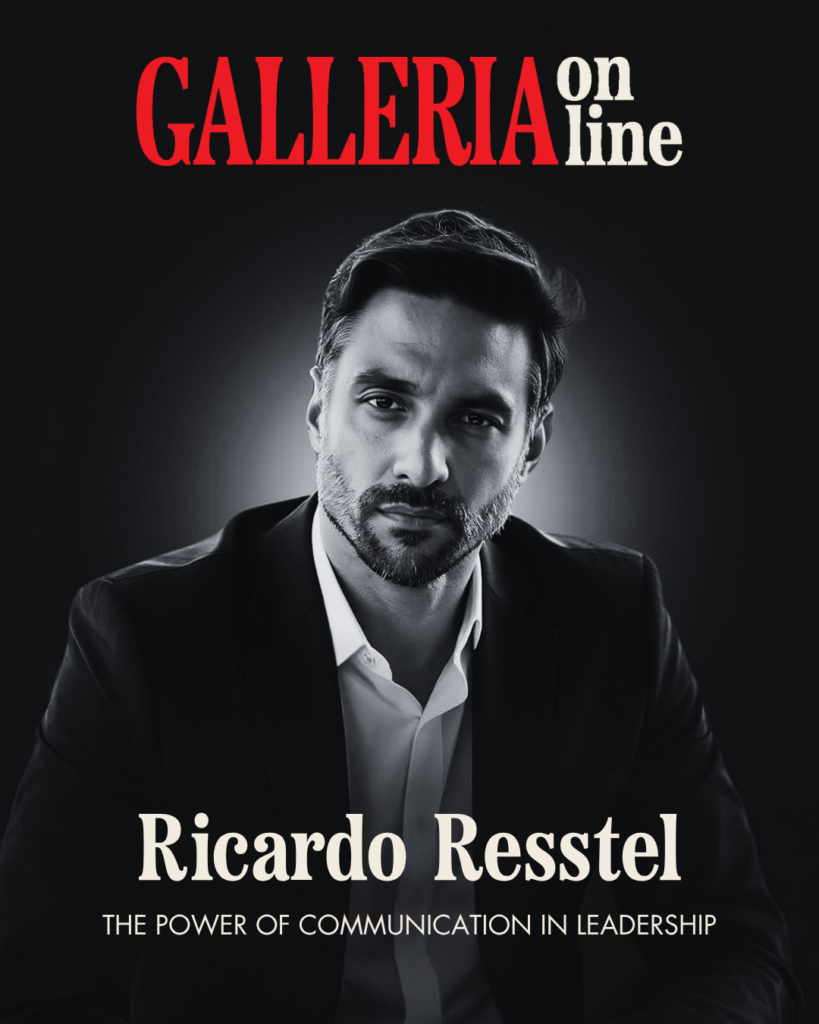
Communication is often treated as a secondary skill, something useful, but not essential. In business environments, it is frequently placed behind strategy, finance, operations, product, and execution. Ricardo Resstel’s work challenges that hierarchy. For him, communication is not an accessory to leadership. It is one of the ways leadership becomes visible.
His approach is built on a simple but demanding premise: professionals are not judged only by what they know, but by how clearly they are able to transmit what they know. A strong idea can lose force when it is poorly communicated. A capable leader can lose authority when the message is unclear. A company can lose trust when its positioning is inconsistent. In that sense, communication is not only about speaking well. It is about shaping perception, creating trust, and influencing decisions with intention.
Resstel’s background helps explain the structure behind his work. Trained in Aeronautical Sciences, with an MBA in People Management from FGV, certification in negotiation through the Harvard Business School method, and studies in digital strategies at Columbia University, his formation moves across fields that demand precision, discipline, and decision-making. He is also a pilot and a reserve Infantry Officer of the Brazilian Army, experiences that reinforce a professional identity built around responsibility, control, and clarity under pressure.
That combination matters. Aviation does not allow vague communication. Leadership does not survive without influence. Negotiation requires reading context, understanding people, and knowing when to speak, listen, insist, or reposition. Digital strategy adds another layer: the ability to understand how messages travel, how audiences respond, and how authority is built in public.
This is where Resstel’s work becomes especially relevant to entrepreneurs and executives. In a market where attention is fragmented and trust is increasingly difficult to build, communication becomes a form of positioning. It determines how a leader presents a vision, how a business owner sells transformation, how a mentor holds a room, and how a professional becomes associated with authority in their field.
His own public positioning reflects that logic. Resstel does not speak about communication as a generic motivational asset. He connects it to influence, sales, leadership, public speaking, and the ability to become a reference in one’s market. The message is direct: if people do not understand your value, your value is not fully working for you.
For Galleria, this is the point of interest. Resstel’s work belongs in a broader conversation about modern success. The old idea of competence as something self-evident is no longer enough. In today’s business culture, visibility, articulation, and trust are part of the architecture of growth. People do not only need to be good at what they do. They need to be able to explain why it matters, to whom it matters, and why they are the right person to lead that conversation.
That does not mean communication should become performance without substance. In fact, the strongest aspect of Resstel’s approach is the opposite: communication as structure. The goal is not to create a polished persona disconnected from reality. It is to align message, behavior, authority, and delivery. When that alignment exists, communication becomes less theatrical and more strategic.
His career also reflects a shift in the way leadership is understood. Authority today is rarely built only through position. Titles may open doors, but they do not guarantee influence. Leaders are expected to communicate across stages, meetings, social platforms, teams, clients, investors, and communities. They need to simplify complex ideas without making them shallow. They need to inspire without losing precision. They need to sell without sounding empty. They need to lead conversations before they lead decisions.
This is why communication has become one of the clearest separators between those who remain technically capable and those who become publicly trusted. The professional who communicates with clarity does more than speak. They reduce uncertainty. They make decisions easier. They help people see a direction.
Resstel’s work sits exactly at that intersection: communication, leadership, business, and perception. His message is not that everyone needs to become a speaker. It is that every professional who wants to lead needs to understand the weight of their own voice.
In a culture where influence can be confused with noise, Ricardo Resstel brings the conversation back to intention. Communication is not decoration. It is not vanity. It is not simply stage presence. It is one of the most important forms of professional leverage.
The leader who communicates well does not only sound better. He becomes easier to trust, easier to follow, and harder to ignore.