
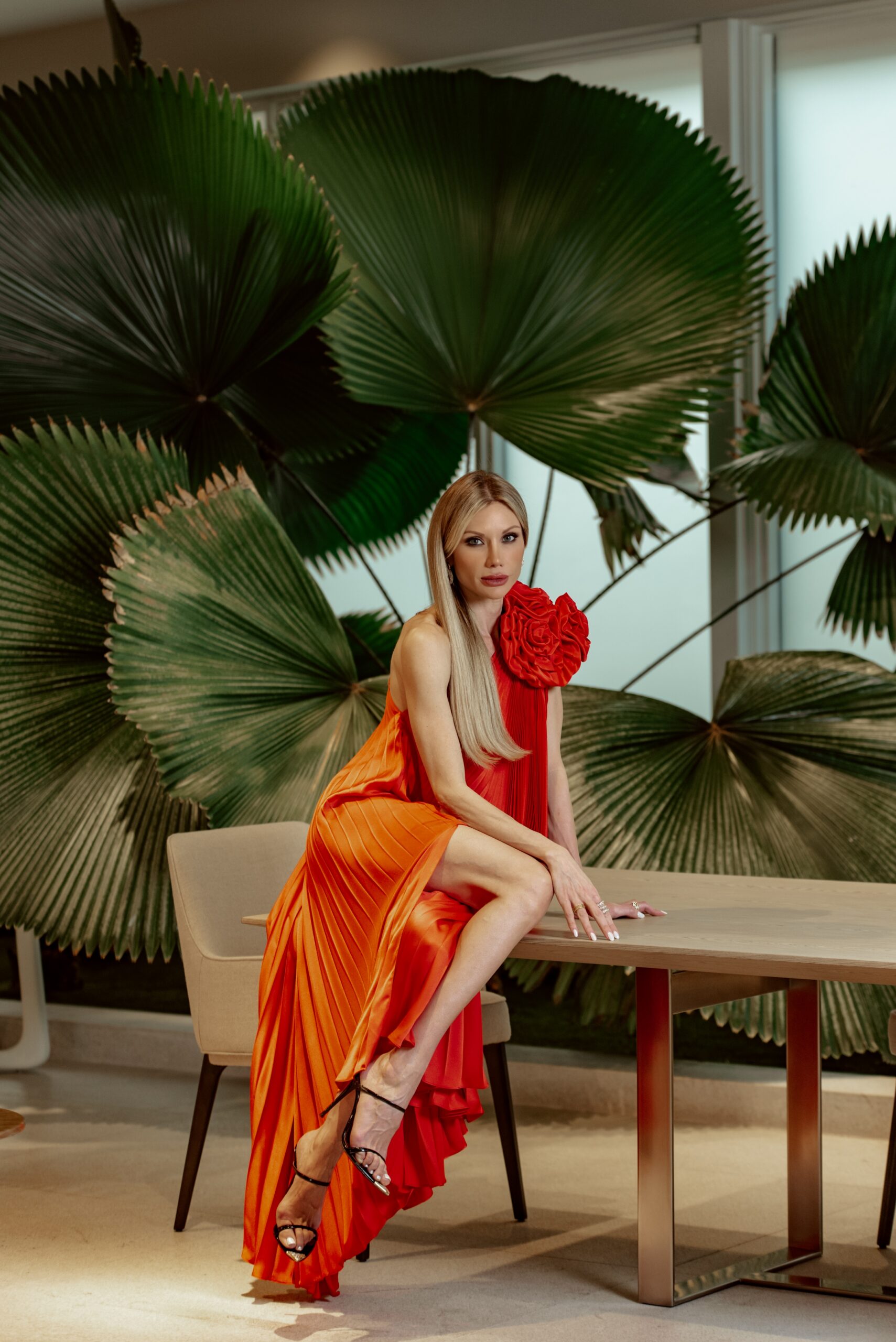
In a world where fashion is often treated as speed, spectacle, and season, Anne Fontaine offers another proposition: clothing as permanence, as presence, as a space a woman enters before she enters a room.
Inside Artefacto’s Miami showroom, that idea becomes visible. Fashion steps away from the runway and into a lived-in gallery, where silhouettes, textures, and gestures are read not as isolated details, but as part of a larger language of identity. Anne Fontaine’s designs, precise, sensual, and quietly powerful, move among sculptural seating, stone, warm woods, and softened architectural lines. The result is not a simple meeting between fashion and interiors. It is a study of how style inhabits life.
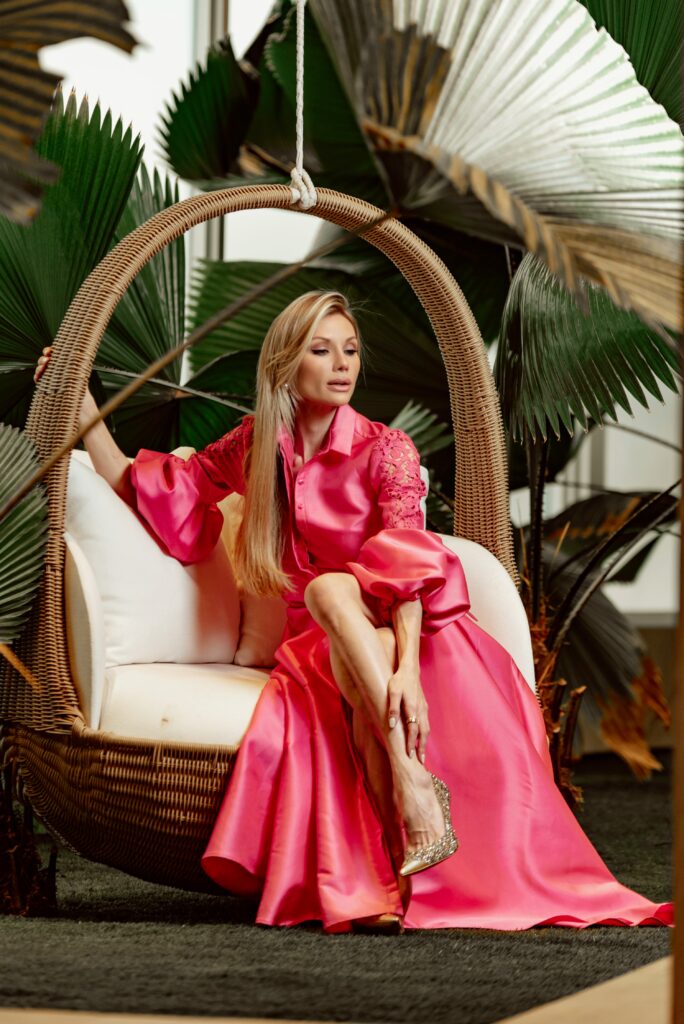
Every pleat seems to echo a curve. Every cuff mirrors a clean line. Every contrast, softness held by structure, sensual detail disciplined by cut, reinforces the same idea: elegance is not an accessory. It is a way of organizing presence.
Anne Fontaine describes clothing as “intimate architecture,” a phrase that shifts the way fashion is understood. A garment is not only something worn. It is a space built around the body, carrying memory, rhythm, posture, and intention. Her pieces do not exist only for a moment of display. They are designed to belong to a woman’s life: to the way she moves, pauses, works, arrives, and inhabits the environments around her.
That philosophy gives this editorial its quiet strength. Against textured walls, warm neutrals, and sculptural forms, the wardrobe does not perform. It belongs. The camera does not capture a woman posing for fashion, but a woman inhabiting it. In that stillness, luxury reveals itself not as excess, but as alignment.
The dialogue between French structure and Brazilian warmth gives the scene its particular balance. Anne Fontaine’s sharp tailoring and feminine restraint find a natural counterpoint in Artefacto’s atmosphere of material softness, organic curves, and tactile calm. Stone appears veined like water. Upholstery holds the texture of sand. Light moves quietly across surfaces. Around it all, the clothes create their own architecture: disciplined, intimate, and alive.
This shoot was conceived less as a collaboration between brands and more as a conversation between ways of seeing. Fashion and interiors share the same essential question: how do we shape the spaces we live in, and how do those spaces shape us in return?
The best clothes, like the best rooms, never ask too loudly for attention. Yet they hold it. They create mood, define proportion, and offer a sense of self without explanation. They allow a woman to feel composed without being constrained, visible without being ornamental, elegant without being distant.
In a culture trained to chase novelty, this moment argues for coherence. It invites us to consider fashion not as something separate from daily life, but as one of its most intimate forms of design. What we wear, like where we live, becomes part of the architecture of identity.
Here, fashion does not simply enter a room. It becomes one.
Dianna Desboyaux writes Living Beautifully.